Posted by
Robin R. Foster
Wednesday, August 3, 2011
0
comments
Munyaradzi Muzenda is the Director of Africa Speaks, an organization which will celebrate it's 10th anniversary on October 27th this year and is located in Marondera, Zimbabwe, a town of about 100,000 residents.
See video within article below.
"Many African young people are found roaming in the streets despite having completed their formal education. Others have no means of gaining formal education, as such, the educated without employment and the uneducated without employment forms a greater part of Zimbabwe, SADC and the African’s population. These eventually turn to various illegitimate and sometimes illegal activities in search of live hood, for lack of nothing better to do and in the hope of achieving something at the end of the day. As a result of this, many young people are prone to ill behavior which consequently affects their well being in terms of health, social status, and potential to become a better person with much to offer to Africa."
Africa Speaks has set a goal to shape the next generation of entreprenuers in agriculture where they will work to become stakeholders land offered to Africa Speaks by the Municipality of Marondera. We look forward to learning more about Munya and Africa Speaks.
We are equally excited to extend a warm welcome to Munya as an official contributor of Over Troubled Water. He has been designated as our official African Griot. He is a great African storyteller. In addition to storytelling, Munya will help us accomplish the following goals of Over Troubled Water:
1. He will share the artwork of the youth of Zimbabwe and interpret it for us.
2. He will contribute stories on video to Over Troubled Water.
3. He will share videos of historical landmarks and significant places in Zimbabwe and other regions.
4. He will help us understand how to conduct genealogy research in Africa as well as teach us the importance of names in Africa using articles and video.
I had a great planning meeting with Munya today, and he will tell is first story on our Blog Talk Radio Show tonight at 8pm Eastern: Over Troubled Water. You will not want to miss it!
After you have reviewed the items below, please share your thoughts, and let me know how you plan to commemorate the rest of the year. If you are just finding out, you have missed half it so far. How can we bring awareness to the resolution, and what can we do to enjoy "economic, cultural, social, civil and political rights as well as participate in all political, economic, social and cultural aspects of society, and promote a greater knowledge of and respect for our diverse heritage and culture?" We will continue this conversation in the discussion section of the Over Troubled Water Facebook Community.
"On 18 December 2009, the United Nations General Assembly proclaimed the year beginning on 1 January 2011 the International Year for People of African Descent. The Year aims at strengthening national action and regional and international cooperation for the benefit of people of African descent. This includes their full enjoyment of economic, cultural, social, civil and political rights, their participation and integration in all political, economic, social and cultural aspects of society, and the promotion of a greater knowledge of and respect for their diverse heritage and culture.
Around 200 million people who identify themselves as being of African descent live in the Americas. Many millions more live in other parts of the world, outside of the African continent. In proclaiming this International Year, the international community is recognising that people of African descent represent a distinct group whose human rights must be promoted and protected.
The main objective of the Year is to raise awareness of the challenges facing people of African descent. It is hoped that the Year will foster discussions that will generate proposals for solutions to tackle these challenges." See International Year of People of African Descent.
March 21, 2011 was International Day of Elimination of Racial Discrimination:
Integrating People of African Descent in Bolivian Society:
Calendar of events
29-30 April - Conference "Sur la route d'Afrique" (On the Road to Africa)
CHRS Armée du Salut, Paris, France
More details (PDF - in French)
18-20 April - Interregional Philosophical Dialogue between Africa and the Americas - "Africa and its Diaspora"
Purdue University, Indiana, United States of America
More details
28 March- 1 April - Working Group of Experts on People of African Descent/ 10th session
Palais des Nations room XVIII, Geneva, Switzerland
More details
21-23 March – SEPHIS Workshop "Equity, Justice, Development: People of African Descent in Latin America in comparative Perspective"
University of Cartagena, Colombia
Contact: milanes58@gmail.com
More details (PDF)
21 March – International Day against Racial Discrimination – Film Screening: "Defensa 1464"
Palais des Nations room XII, Geneva, Switzerland
More details (PDF)
7 March - Committee on the Elimination of Racial Discrimination (CERD): Thematic Discussion on racial discrimination against people of African descent
Palais des Nations room XVIII, Geneva, Switzerland
More details
2 March - Human Rights Council/ 16th session: Panel on the enjoyment of the HRs of people of African descent
Palais des Nations room XX, Geneva, Switzerland
20 October - Panel discussion on "The Causes and Consequences of Racism"
Eastern Michigan University, Ypsilanti , Michigan, United States of America
Contact: vokafor@emich.edu
More details (PDF)
9 October - 16th Annual Maafa event to commemorate the enslavement of Africans San Francisco, California, United States of America
Contact: woseOAK@aol.com; mail@maafasfbayarea.com; wandasabir@gmail.com
3-7 October – World Afro-descendant Youth Summit
Radisson Europa Hotel & Conference Center San José, Costa Rica
Contact: cumbre@proyectocaribe.org, circuloafro@gmail.com
More details (PDF)
22-24 September - 7th International African Diaspora Heritage Trail Conference
World Trade and Convention Centre, Halifax, Nova Scotia, Canada
Contact: ansa_newsletter@gov.ns.ca
18-21 August – Cumbre Mundial de Afrodescendientes (World Summit on Afro-descendants)
La Ceiba, Honduras
Contact: cumbremundialafro@gmail.com
11-13 August – Pan-African Women’s Action Summit
Minneapolis Community and Technological College, Minneapolis, Minnesota, United States of America
Contact: pawas@copelandcarson.net
6-12 June – Afro-Brazilian Arts and Cultural Heritage Festival
Washington DC, United States of America
Contact: zangada@capoeiradc.com
More details (PDF)
5 June 2011 - Launch of a series of events for the International Year for People of African Descent -St Thomas
University of Virgin Islands, St Thomas Campus, Charlotte Amalie, US Virgin Islands
Contact: ludlowebailey@gmail.com
18-20 May - Colloque "Enseigner les traites, esclavages, leurs abolitions et leurs héritages" (Seminar on aducation programme on the slave trades)
Ministère de l'Enseignement supérieur et de la Recherche, Paris, France
Contact: marie-albane.desuremain@paris7.jussieu.fr
More details (PDF)
5-7 May - Annual Conference of the Canadian Association of African Studies "Africa Here, Africa There"
York University, Toronto, Canada
More details (PDF)
4-11 May – Black International Cinema Festival
Fountainhead Tanz Theatre, Berlin, Germany
Contact: bicdance@aol.com
Note: This calendar of events is provided for information only and not all are official UN events. OHCHR only takes responsibility for the organization and outcome of its own events.
Posted by
Robin R. Foster
Tuesday, July 12, 2011
0
comments
Chances are that most of us may have never heard of the Sidis. They are a community in India whose roots lie in Africa. They were brought to India beginning in the 12th Century as slaves. See Sidis and Scholars: Essays on African Indians by Amy Catlin-Jairazbhoy.
Not all Sidi ancestors were slaves. Some were sailors, servants, and merchants who came as the result of the "sea trade through East Africa and the Gulf." See The Lost Africans of India. Much of the history of the Sidis is lost to them, however, a study of their music and dance bares resemblance to Africa. Also, their hair and complexions and features are distinctly African.
At least two communities of Sidi people can be found in Gujarat and Karnataka. Thousands live in poverty along the West coast of India. See African Tribe Lost in India.
The HonorableJacob Okanka Obetsebi-Lamptey was the Minister of Tourism in Ghana and "The Joseph Project" was his brain child.
Millions of Africans were captured and shipped to Europe and the Americas. We still suffer the results of this separation from our homeland and enslavement today. Even though this will be no easy task, one of our purposes here is to find healing once and for all.
We have been taught to despise ourselves and the very resources which can help in the healing process. Many of us know something inside and in between us does not "feel" right. Some of us still suffer amnesia. Others have risen like Joseph of Egypt to prominence and greatness in the land where we were once enslaved despite all the psychological and emotional chains which still bind many.
Well we will only ever be as strong as the weakest member. In order to continue to be successful in our various communities, it is crucial that we cloak ourselves in tolerance and love and work to forge alliances with African ancestored peoples across the globe. It is time to get on with the work of healing.
I am sharing a few tips for how to initiate that healing below, but first of all think about your last family reunion. How did it feel to take a little time out to go home and spend some time with your family in a familiar place? How did you come away from that experience? In a certain respect, too many of us have remained orphans unknowingly.
Take the time out to go home. Walk the place your ancestors walked. Visit the sites where they were last such as the slave fort, the dungeon, or the coast. Acquaint yourself with your African family. Look into their faces and embrace your heritage there.
Please review the list below, and by all means share your own ideas.
1. Find forgiveness.
2. Reconcile with your family members if needed.
3. Eliminate the word "can't" from your vocabulary.
4. Learn what you can about your ancestors.
5. Make a pilgrimage to Africa.
6. Refuse to speak negatively.
7. Learn what you can about African history and colonization.
8. Learn the truth about the history of slavery and emancipation in the place your ancestors were enslaved.
9. Learn about the cultures, people, and current events in Africa.
10. Share what you know and learn with others.
Share what you know:
We would love to post your photos and experiences here highlighting your pilgrimage to Africa so that others who have not had the opportunity to go may be encouraged to do so.
Submitted by Nana Nethanel Nasi.
One of the many treasures shared by Nana Nethanel Nasi are photographs of the site in Assin Manso, Ghana where captured Africans bathed in chains after being captured a marched toward the coast. Also, please see this blog, Destination Ghana. The writer of that blog has not posted since 2007. Perhaps you can encourage her by leaving a comment.
The actual body of water called "The Last Bath." Submitted by Nana Nethanel Nasi.
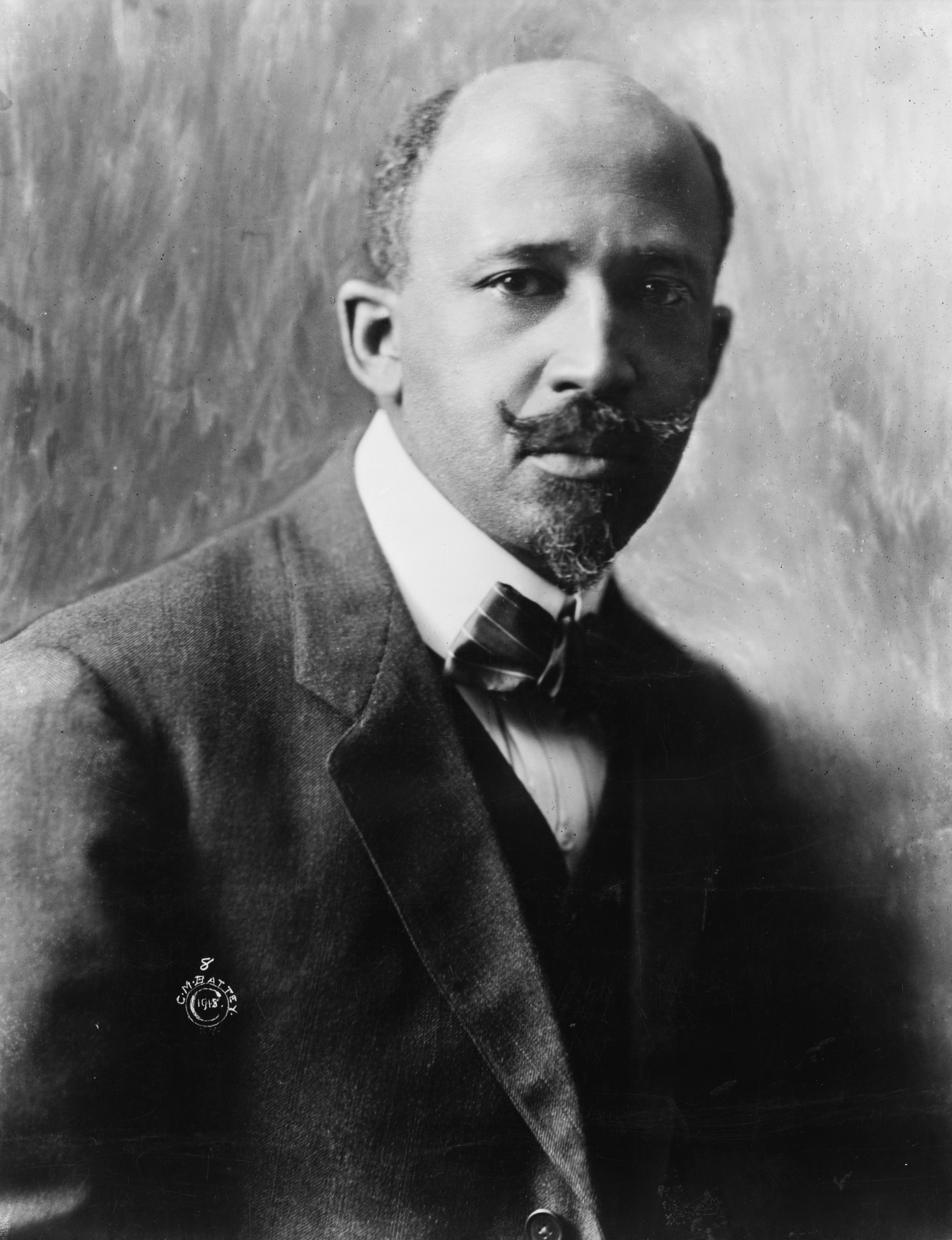
After many years, he was invited to Ghana and was provided with funding for the project in 1961. He did not live to see his project completed, but he is greatly revered by the people of Ghana. He is buried there and his home was made into a museum.
W.E.B. DuBois Mausoleum. Submitted by Nethanel Nasi.
What difference would there have been in the lives of African Americans had DuBois been able to publish his encyclopedia in America? How would our relationships with those on the African continent been different today? Are we able today to restore the history that has been lost and strengthen relationships after so long?
You may be surprised to learn as you follow along that the children of the Diaspora have not been forgotten by those on the African continent.
More Resources:
You will discover more about W.E.B. Dubois from the following video. It seems Dr. Henry Louis Gates' had a great uncle who knew him. I do own Encarta Africana, which Gates discusses. It is beautifully done. I will share with you, however, the fact their are those who do not believe the encyclopedia is accurate enough. I cannot provide an opinion on this.
The Encyclopedia Africana
W.E.B. Du Bois had long advocated and pursued an encyclopedia project. In his Autobiography he wrote:
I had planned an "Encyclopedia Africana" in 1909 but my leaving Atlanta for New York postponed this project and the World War prevented its renewal. In 1934 I was chosen to act as editor-in-chief of a new project of the Phelps-Stokes Fund to prepare and publish an Encyclopedia of the Negro. I spent nearly ten years of intermittent effort on this project and secured cooperation from many scholars, white and black, in America, Europe and Africa. But the necessary funds could not be secured. Perhaps again it was too soon to expect large aid for so ambitious a project directed by Negroes and built mainly on Negro scholarship. Nevertheless, a preliminary volume summarizing this effort was published in 1945. (p.302)
In 1961 Du Bois accepted President Nkrumah's invitation to move to Ghana and work on the Encyclopedia Africana project. The project was underway, but far from being completed by the time of Du Bois's death in 1963. See: WebDubois.org
Posted by
Robin R. Foster
Tuesday, June 7, 2011
0
comments
Our History Before Slavery
By Robin Foster
Welcome! I am inviting you on this journey with me to discover who we were before slavery. I will continue to research the plight of my ancestors during the period of slavery in the America's, however, I know that the best part of who they were existed before they were kidnapped and crossed the Middle Passage.
My focus has been to search out the principles that made them successful so that I can evaluate my own life and provide an example to my posterity. The African students and friends whom I have known through the years have been good examples to me of hard work, respect, and community.
I have identified these same qualities in my parents and grandparents and other family members. Unfortunately, I can only trace my forebears so far at present. I have found solace in identifying as many as I have been able to document, but I think it is very dangerous to let slavery alienate me from where I came from before slavery. If I do not overcome the intentions others had to erase who I was, they will be the victors and I will cease to learn more.
I am referring to more than paying someone to examine my DNA and provide a certificate from which tribe I descend. When I look at my round nose, my coarse hair, and the great desire I have to work past the amnesia which erased our sense of who we were and where we came from for myself and my posterity, my desire is to connect with other African ancestored peoples, share stories and compare notes, then move forward.
Thinking I would begin with searching for others who have bridged this gap, I started this site. Up to this point, it has been my great fortune to collaborate with genealogist, peonage researcher, radio and television Host of Nurturing Our Roots, Antoinette Harrell. I am fortunate to also be associated with our colleague, Nethanel Nasi. The sacrifices that they have rendered have paved the way and each of us will be able to add a section to the bridge. Brother Nasi sacrifices to help the people of Ghana and has recently organized resources and people locally to help people in the Mississippi Delta have the things they need after devasting tornadoes in the region. I know in my heart that these key individuals would help in this endeavor as well. I was not prepared, however, to come to the understanding that Brother Nasi as well as Antoinette hold the key to recapturing vital hidden history. I am happy to be able to share their insights about their experiences on our native land with you. I also invite others to contribute their stories with us here so that we may all benefit.
Son, Aubrey Younger (Left) (aka) Prince Obiri and Nethanel Nasi (Right).
In our second or third conversation, he explained the connection between W. E. B Dubois and Ghana. There is a museum there, and W. E. B. Dubois is buried there. I have read and studied the life of Dubois, but I marvel that so much history is still left for me to discover. I am also intrigued by the fact that Dubois' personal library was left in Ghana.
Come back often as we make sacred connections, explore our history before American slavery, and share the stories and experiences of people of African decent from every continent.
With the blessings of technology, all African ancestored descendants can develop an online haven where healing can take place. Let's recite and relish in our history. Let's come together to identify the principles that help us to enjoy freedom and happiness. Hopefully, "Over Troubled Water" will be the beginning of that for you. We welcome contributors who will share their history and perspectives that we may all learn and benefit.
Keep the content flowing!
Our Motto:
"I believe that all men, black and brown and white, are brothers, varying in time and opportunity, in form and gift and feature, but differing in no essential particular, and alike in soul and the possibility of infinite development." --W.E.B. Dubois
The village is coming together! We are from many diverse groups from around the world. We invite you to use Over Trouble Water as an avenue that will spark much needed dialog. This dialog can lead to great enlightenment and healing. Every effort will be made to supplement using historical resources for further study, however, opinions or views expressed in articles reflect the contributor's life experiences and are the responsibility of the respective contributor. Comments should be addressed to the respective contributor.


 Image via Wikipedia




 Posts
Posts



