Powered by Blogger.
Over Troubled Water

Strengthening the relationships between all African ancestored descendants

Tuesday, July 5, 2011 1 comments

"At the bus station in Durham, North Caro...Image via Wikipedia "At the bus station on Durham, NC,"  May 1940, Jack Delano


If you really pay attention and study the lyrics of Blues songs, you will learn a great deal about the struggles on Southern plantations which gave birth to this form of music. Slavery, sharecropping, and oppression during the Jim Crow and Civil Rights Eras inspired African Americans to tell their story in song.  No one person invented the Blues.  It sprung out of gospel music.


Each song is a varied as the personal experiences of African Americans coming from slavery and involuntary servitude.  Music was the only of the only things they had to bring joy and to ease a troubled mind. This is the reason it may sound mournful to some who do not understand its origins.  The Blues has influenced Jazz, R&B, and  Rock 'n Roll.

People sang the Blues for themselves long before it was commercialized.  It started to become popular in the early 1900's.  The Mississippi Delta is recognized as the place that produced the greatest Blues artists.  Blues was also popular in the Carolinas and Texas.

Blues songs should become a major resource as we study African American history.  See this neglected art form as oral history put to song increases our appreciation for it.  From the Blues, we can gain great insights about the history of our ancestors in these rural areas.  Blues songs help to supplement the missing oral history in our own families.  Sheba, the Mississippi Queen, escaped with her mother and siblings from Sunflower Mississippi in 1965.  She grew up singing the Blues in the cotton fields.

The following video was shared by Sheba and Miami Dade College. Instructor, Robert Moore gathers a few of his friends to teach his students about the history of the Blues.  Listen especially to the words of the song Sheba dedicates to her mother and grandmother.  Sheba will share an article with us soon about the history of the songs included on her album, "Butter on My Roll."


A 2010 Black History Month production
at Miami Dade College, Wolfson Campus.

Hosted by Robert Moore.
Tuesday, Feb. 23, 2010


Enhanced by Zemanta

0 comments

Walter C. Black, Sr.
Over Troubled Water is pleased to wish Walter C. Black, Sr a Happy Birthday!  Since 2008, Walter has worked with Antoinette Harrell of Nurturing Our Roots and Gathering of Hearts to contribute to the pictorial history of 20th Century slavery in the Mississippi Delta.

""Walter is not a selfish person.  He has provided wonderful photographs and and sacrificed his time to the cause.  He has helped for many years. I could not have done it without him,"  said Antoinette Harrell.

Walter's first camera belonged to his dad.  He started taking photographs with it between eight and ten years old, and he has been taking them ever since.  He has taken photos of family at gatherings, and he says that if anyone is looking for a photograph, he probably has it.

Walter does not have a fear of moving around with the camera.  He is definitely not the type of photographer who stands way back to take pictures.  He says he will get as close a possible, get on the ground, and has even taken photos from the pulpit.

A native of Westwego, LA, Walter spend most of his time with his mentor, his grandmother. He says he grew up helping his grandmother around the house, so he learned all about what a house is supposed to look like.  "If you don't train up a child, he won't know,"  said Walter.  He made his bed, fed the chickens, and milked the cows all before he went to school in the morning.

Walter's mother and grandmother both had houses on the same land. Walter, one of  eight children, stayed
in the big house on the front of the property, and his mother and brothers and sisters stayed in a house behind his grandmother's house.  He helped to take care of his brothers and sisters when his mom went to work. Even right now, his family is very close.

Walter studied welding and blueprint reading. He worked in a shipyard for a number of years, the sheriff's department for thirteen years, and at Union Combine were he retired soon after it became Dow Chemical.  He continued taking photographs until he met Antoinette in 2008 at a planning meeting.  He heard the passion in her voice about her work in the Mississippi Delta.  He volunteered to take photographs and contribute them for no charge, and he has been doing this ever since.

Walter has been an eyewitness to 20th Century slavery.  He has driven down many roads, but it was not until he teamed up with Antoinette did he venture down the unbeaten paths. There they have discovered pockets of people living on plantations in poverty.  Many do not have to pay to live in the shanties, but they are available for labor when called on by the plantation owners.

Kosciusko, Mississippi is the birth place of Oprah Winfrey.  This was one of their first tours.  See Peonage letter leads Harrell to Oprah Winfrey's childhood home.  They found important records documenting peonage among bird droppings and silverfish in the dark and dusty courthouse attic:


"These people are hidden off on corners of the world were nobody will ever see them, but they have made everybody else rich.  They are descendants of a form of sharecroppers that everybody has put off to the side. They were not able to go to school like everybody else. They had seven to eight people in the family, and everybody had to work.  Once they got into the third grade or so, that was it.  They were out in the field full time.  These are the people that we need to get to know, the people who were left behind," said Walter.

The first thing that really sparked Walter's interest in the Delta occurred while he and Antoinette were riding through the Delta in search of someone to provide information about sharecropping. A little boy crossed the road with no shirt on and barefoot.  They stopped to talk to him, and his mother came out and invited them into the house.  "The porch was raggedy; there were holes in the floor, and there was sewage out back.  We only came looking for a story, but that is how we really got started helping people. They became the first people we helped in Mississippi," said Walter.

"Antoinette was called to do this, and whatever it takes, I am going to help her.  She is a jewel" said Walter.  Walter attributes to Antoinette his increased understanding about the knowledge that he has a past and a future. He is looking forward to visiting Cameroon and Mozambique and seeing someone that really does look like him.

Some people do not want to acknowledge they come from Africa.  "I think they need to go and look in the glass. They need to go look in the glass and come to themselves," said Walter. He also said, "If you take a look at yourself, you will see who you look like, and someone made it across on that boat.  That is why you are here.  I know where I originated from. I want to have dual citizenship."

Walter was inspired by the videos and photographs that Antoinette had from Niger.  In 2009, he discovered his ancestry through African Ancestry.  His mother's ancestry originated in Cameroon, and his father's ancestors came from Mozambique.


Enhanced by Zemanta

Saturday, July 2, 2011 0 comments

Back home as a child, there were so many kids that were told that they did not have a dad. Lots of mothers had to make it on their own. What made it so much sadder was that the more kids they had the more there were that had to work in the field. Most of the men had three to four groups of kids from different women, and they did not stay to take care of them. Lots of the dads just kept on moving and getting more kids. To me, the black man had no respect for his women and kids. He felt they were not his responsibility, and in a way, he was right because of the way the white man controlled them.


Right in my own family there were men that had more than one family. My granddad was one. He was so bad that he had a baby by my grandmother's best friend. This broke her heart. She was never the same after that. She was very much in love with him. Later on in life, I did get to meet that uncle. One of my uncles had two or three families. He got so good they start named the kids the same name.

Once when I went to visit Mississippi, my aunt and I were shopping when she saw a group of people. She said that they were my kinfolk. She said something that was great. She said, “You cannot take it out on the kids.”

Things did not work out for us that way. My dad disowned us and said we were not his kids. From what my mom told me, he would say this to everyone but not to her. My dad had about four set of kids, and we all seemed not to like each other. Years later, I was trying to bring our family together. I was told by one set that they did not know us and did not want to get to know us. This broke my heart, so I stopped trying to reach out.


Dad did not do anything for us. I remember wanting to be with my father, but he never did come around. Maybe if he was there, so many bad things would not have happened to me. In his last days, I had a talk with him. He did clam me as his child. My mom had to take care of us all by herself, and she had another child that was not by my dad. This mentality came from slavery. Now that I am grown, I see how messed up our black men were. They were taught and trained to do just what they did, and they got very good at it. Have they being deprogrammed from that slave frame of mind? No they have not!

When my mom moved us to Florida, there were new ways of dealing with black people and having kids. My right to have kids was taken from me by people playing God just like the slave master. A pharmaceuticals company in Homestead, Florida by the name of Dalkon Shield would insert in young black girls what we called “Loops” between the 1960's and 1970's. They were also called IUD's. See ONE LAWYER'S 25 YEAR JOURNEY: THE DALKON SHIELD SAGA. My twin and other girls that I went to school with did not have kids.

I found out about a class action lawsuit when I came back to Florida, but I was too late because the clinic that had my records was destroyed by Hurricane Andrew. I cannot say to a child you do not have a father, but I can say my master made sure of that.

Learn More:

"With the advent of the Lippes Loop in the 1960's, interest was rekindled in IUD's as a method of contraception. The Dalkon Shield appeared on the market in 1971. As did all IUD's then being sold, the Dalkon Shield had an attached tailstring which served two purposes. First, if the woman inserted a finger in her vagina and felt the presence of the tailstring, she was assured the IUD was in place and that she had contraceptive protection. Second, the physician utilized the string to remove the IUD by simply pulling on it. But the tailstring of the Dalkon Shield was different from that of the Lippes Loop or the Saf-T-Coil, the two most popular IUD's marketed at that time in this country. Unlike them, the Dalkon Shield had a multifilament, rather than monofilament, tailstring. The Dalkon Shield tailstring, comprised of 200 - 400 individual plastic filaments encased in a plastic sheath, bridged the gap between the uterus and the vagina."
Enhanced by Zemanta

0 comments

This site was created out of the desire to help strengthen the relationships between African ancestored people.  Our focus in this post is to identify what African Americans can do to individually and collectively to find greater happiness.  I spoke in the last post about my quest to identify the principles that will help me realize a greater measure of freedom and happiness.

I have researched my family history for over twenty five years. This includes spending time with family conducting oral history interviews. I am very proud of their accomplishments, but  I believe they were robbed of the enjoyment they should have felt for what they achieved in life.
Submitted by Nana Nethanel Nasi
They never took vacations.  They continued to work like a slave driver remained over them. When they left work, they spent all their spare time serving in the church or community.  I learned from each of them, especially my father, that I was to drive myself the same if I wanted to measure up.  I took on my father's fear.     I know that he looked at his little girl and feared that I would one day be taken advantage of.  That is a fear a parent in slavery with a young daughter would have.

He kept me under lock and key with exception of letting me go away to school.  It took a lot for me to convince him that I would be ok. He had toughened me.  My father is gone now, and oh how I wish I could have understood back then that he was only trying to protect me.  He transferred his method of survival to me during a time when the threat had long passed away.  How different that relationship would have been.

My father worked himself into an early grave at the age of fifty.  He worked because he did not want to see his family suffer.  He descended from ancestors who worked the cotton fields and saw mills of Mississippi and Arkansas. He worked them as a young boy too in Tennessee.  They were so poor, my father, one of the youngest of twelve children ate mud pies and searched the dumpsters of Memphis for leftover food for his family even though his mother owned a store and his father was a traveling carpenter.

He vowed he would we would never go without, and we always had plenty.  He built homes from the ground up all by himself. He would teach the fatherless young boys in the neighborhood how to paint, drywall, and pour a foundation for pay.  I was jealous of them then. I was not a boy and could not get that kind of time with my father.  I did not realize then that he knew they were hungry, and it was better to give them work than to give them food. They would learn that they could eat if they would work.
Be the Healing

What behaviors can you discontinue today that your ancestors learned in order to survive oppression or slavery? What will you teach your children?  According to Dr. Joy DeGruy-Leary, we hear some falsely attribute these behaviors to our culture. Our ancestors only adapted to survive the conditions of their day.  If we continue incorporating them, we will never be free.

I am so grateful to Conscious Media Productions for sharing this resource with me: Be the Healing.  Purchase her book and companion workbook entitled "Post Traumatic Slave Syndrome."  You will find a great many more resources such as articles, podcasts, and events. You can follow Dr. Joy DeGruy-Leary on Twitter and Facebook.


Please share what you learn about the following:
How would you define racism?  
Is it possible that our ancestors suffered post traumatic trauma as a result of slavery?
Could this post traumatic stress have had any effect on their descendants?
After slavery and decades of racism and oppression, how healthy are African Americans today?
What are the negative behaviors that we have learned in the process of trying to survive?
What are the problems today? Solutions?

Enhanced by Zemanta

0 comments

Frederick Douglass Ambrotype, 1856Image via Wikipedia


The self-educated Frederick Douglass escaped from slavery and became a great abolitionist.  He was asked to speak on July 5, 1852 to commemorate the Fourth of July.  On that particular day, he could not rejoice when the majority of his race was yet enslaved.  He could only speak out of the ironic nature that he would be selected to speak and the insensitivity of a body who supposedly supported his cause.


Learn more at this most excellent article, Frederick Douglass' 4th of July Speech (1852) by The Black Educator.


Enhanced by Zemanta

Friday, July 1, 2011 2 comments

AfricanAmericansWe come in all shades.     Image via WikipediaOne of the necessary things that we will need to do to strengthen our relationships as African ancestored people and in particular as African Americans is to identify the destructive behaviors which we were subjected to during slavery. What behaviors did we continue to act out upon each other for generations? Queen Sheba has come forward to identify the behaviors that were manifest in her life generations after slavery while they were trapped on a plantation in Sunflower, Mississippi until 1965. She has undergone the painful process of healing and wants to help others by acknowledging the hidden secrets. Some things should not remain a part of our legacy.


By Queen Sheba

Looking back on my life and thinking about what I went through to get love is very hard for me. I came into this world not alone but with a twin sister. I love my sister and always will. See I was very dark and had bad hair. My sister was light and had what they call “good hair.” It was not nappy. My mom said she would take us out, and people would always play with my sister and not me. She had to tell them, “If you cannot play with both of my kids, do not play with neither.”

In some ways it seems to me that she stepped over the line. I felt she was more for my sister than me. It seems like my sister could not do any wrong. I got blamed for everything. My sister would do things, and put them on me. She knew that they would believe her over me. She knew she had that kind of control over people and used it.

For some reason, I remember her cutting the curtain in my grandmother's living room, and she told them I did it. This hurt me because no one believed me. I know that I was going to get a beating, and I was very afraid of beatings. Once my sister and some other kids were out playing in the field trying to do what grownups did. I went and told. She came to the house and said that it was I. That's when I start pretending that something was wrong with me. I would just fall out rocking from side to side like I was having a fit. Everybody started paying attention to me acting like they cared. I did this because I did not want to get a beating. I do believe that was another reason my mom kind of picked my sister over me because of the way I would act.

She was very concerned about me, and took me to the doctor to find out what was wrong with me. One doctor. a black lady, told my mom that there was nothing wrong with me. She told my mother not to pay any attention to me, and that is what brought me out of it. How was I to tell them how much I was hurting inside when I was just a child?

This is a very bad thing to do to children. It makes them feel they are no good just because of the color of their skin. Most of my life I have been trying to make people like me anyway I could. I remember being treated like something was wrong with me, and I tried so hard to fix myself and could not. I would go around to people's houses and help them anyway I could to make somebody like me.  See Dark Girls.
There was a couple that lived next door to my grandparent's house that showed me a lot of love. They would give me things like food, candy and toys and let me sleep in bed with them. I knew the wife was sick all the time. I would help her around the house a lot.

I can still smell the sweat from her husband and feel his body over me when something happened one day that I did not want the candy, toys, food, and the kind of love they were giving me anymore. I lock it up inside and did not tell anyone. This was around the time that my mom had went to Florida. I was so glad she came back to get us. This couple tried to get my mom to let me stay with them but she would not. Thank you, Mom!

I have a first cousin that was very dark. At the time when I was a kid, she was the only one in the family so dark. Her mom acted like she hated her. Most of her kids were light, but this one was darker. She was treated like an outside child just because she was dark. Even today, she is not as close to the family as the rest of the kids. I have always through that she was so beautiful. She had nice smooth skin and pretty white teeth.

I remember another lady that had a baby from the boss man. This kid was almost white, but he had that one drop of black blood in him. This lady worshiped this child. He did not work in the fields. He stayed at home, and she treated her other kids like dogs and used to call them dogs.

Another sad day for me was when I started my period. No one told me anything, I was ashamed and somebody threw some rug at me. I cannot remember my sister being treated that way. It seemed that it was my fault, and I had done something bad. I was hated for that.

I remember one time we were playing in the yard. As we played baseball, we had a stick of stove wood for a bat. Somehow the stick came out of my hand and hit my brother. He was bleeding really bad. I did not mean to hit him. Everyone thought I did. Every grownup in the house that day beat me. It had to be around four of five grownups there that day.

People seemed to watch and know just what child that they could have their way with. They could see me coming for a mile because I had a sad look on my face. One of my cousins mistreated me. I remember we were in grandmother and granddad's bedroom, and he took advantage of me. I can still feel that pain inside of me down in my soul. I thought he was going to show me love not hurt me. This is another thing I did not tell anyone because I felt they would not believe me. I hated him and was so glad when they ran him out of town because of something he had did downtown to the white people.

When I got older I would go with boys just to get them to like me. They would use me and keep on going. I did not like me. How was I going to get out of my skin? I used to pretend I was someone else. I had pretty hair, my skin was white, and everyone liked me and wanted to be with me. Then I would wake up and look like a fool.

I hated myself. There was only one spot in my life that kept me going. That was my granddad. He would tell me that the way I acted and my kindness to people would take me a long way, and it did. However, people sometimes take kindness for weakness. How can you run from yourself? Wherever you go, there you are. I had to find away to get away from me. That alone is sick. As a young girl, I tried to escape through daydreaming and who ever would hold me in their arms to tell the truth. They could not comfort me. They only wanted one thing.

What social ills can you identify that need to be guarded against?
How can we protect the next generation?
Enhanced by Zemanta

1 comments

By Robin


Robert Foster (1938-1988)

My memory of what I consider to be our first house is very special to me.  My dad was a mathematical statistician who worked for US Civil Services until 1971.  He was due to be promoted, and I even have the recommendations stating he was well qualified.  This position was given to a less qualified white person.  My father was a GS 12 at the time.  Parents did not talk much back then to young children as they do now.


My dad's life was a miracle.  Well before he was born, I remember my uncle telling me that his grandparents were run off their land.  They had a farm, horses, and a distillery. One day they noticed a sign fastened to a tree that read, "N- - - - -, read and run."  They knew that meant that if they stayed, some of them would hang from that tree!  They left never to return.  They migrated from Mississippi to Arkansas to Tennessee. My father eventually moved to Illinois.


The first house we lived in was the first one that my parents purchased. One day as I looked out the living room window of this house, I saw my father building another house. I had heard no mention of this, but it fascinated me as I watched from next door as he progressed from the foundation to the roofing. I cannot remember how long it took, but it did not seem long. It was a ranch style brick home. He, with great pride, took our family on a tour when it was finished.

I was most fascinated by the dining room which was separated by a varnished, knotty pine wall with a window providing a view to the kitchen. My father helped a lot of family members move to the North. I was oblivious to the struggles of African Americans during the 60's and 70's. The house we lived in was much bigger with two stories and a full basement, but I looked proudly at my dad on our tour and asked, "Can we move here?" He responded without hesitation, "Yes."

I was so happy to live in a place my father had built on the corner of Cutter and Woodruff in Joliet, Illinois. I was very young, but I helped to keep that house clean to show my appreciation. I climbed upon a chair to reach the kitchen sink. I started washing dishes and cooking meals without being asked.

One day as my dad was in the living room watching me while I was literally on my hands and knees hand washing the hardwood floor without being asked. He looked down at me and said, "Do not ever do that for someone else, okay?" I did not know why he made that request then, but I promised I would not.

It is funny how the things we see our parents and grandparents do stick with us. My dad built four more houses and each time I asked, "Can we move here?" My dad always said, yes. I think he appreciated how proud I was each time. We only lived in two of the other houses he built. He turned to rennovating older homes.

My dad would give odd jobs to the young boys and older men in the neighborhood who struggled. Some did not have food to eat. He even became a surrogate father to some boys, visiting their schools and buying graduation attire. He always insisted they take all the math courses they could in high school. I was always jealous because I felt I shared my dad with so many strangers, but some of them today have their own businesses performing services using the skills which he taught them.


Photograph taken on the day of the funeral of James Foster (1897-1962) on March 2, 1962 in Sacramento, California.
Front Row: Robert Foster (Buddy), Hattie Foster Wright, Willie Ann Phillips Green, Living, and Wilie Foster.
Back row: Roy Foster (RB), Bobby Foster, Larry Foster, O. D. Foster, and James Foster (Ted)


I miss my dad, but I discovered where he acquired his skills and talents when I came across his father's, James Foster, carpenter's union dues register. His father was born in Mississippi to John Henry Foster and Mayliza Patterson Foster. He was a traveling carpenter. It is a struggle, but I want to be able to tell the stories of my Mississippi ancestors. How grateful I am to have been blessed by skills that were passed down by my grandfather and who knows all else for whom I am indebted to for the legacy of resilience.

Dad drew his own blueprints, built the houses from the ground up, and did all electrical and plumbing himself.  He applied for his own permits, and wrote the contracts on the homes he sold.  I saw checks come to him for $6000.00 a month for all the rent he collected. He did much better than getting that promotion he was denied.  He picked us up from school everyday, and often already had dinner started.  We never wanted for anything, and we attended private schools.  I am sure carpentry somehow connected my dad to his father who traveled in search of work all his life. He kept this dues book throughout his life:


Local Union 586, Sacramento, California, Carpenter's Union dues book, 1943

Do you have a story to share about a strong ancestor that overcame adversity?  Please let us know.

1 comments

By Robin Foster

Queen Sheba
I would like to take this opportunity to introduce you to Sheba, the Mississippi Queen of Blues.  I met Sheba through my friend and colleague, Antoinette Harrell.  We recently introduced Sheba on About Peonage.  See Mississippi Blues Queen and Her Escape From the Delta.  Her mother was a sharecropper in Sunflower, Mississippi, and Sheba grew up in poverty under very harsh conditions.

In 1965, her mother left her children in Mississippi because she got tired of working all year for the "boss man" and owing him a the end of the year.  After nine months, Sheba's mother came back and moved her children to Florida, "another devil's den," according to Sheba.  Stay tuned to About Peonage as her story unfolds, but I am pleased to announce that last night Sheba called me to find out how she could contribute to this blog.  I was quite surprised to find out that she had been following all the recent posts.

She will be revealing specific destructive patterns we developed during slavery and the oppression of the Jim Crow area.  Many of her insights will have to do with relationships and why it is we as a people have such great difficulty bonding.  I look forward to learning from Sheba. She is a very wise and courageous woman who says it is time for her to give back.

Please visit CD Baby and check out "Butter on My Roll," and you will see why we call her the Queen.  Her music tells her story.  To me, Sheba has become a sister, a living piece of my own Mississippi ancestors caught in the same struggles common to many African Americans in the Delta generations after slavery ended.


Enhanced by Zemanta

Tuesday, June 28, 2011 0 comments

A New Kind of Freedom is Coming!
By Robin Foster

In the latter part of 2010, I took an inventory of all the twenty-five plus years of genealogy research I have conducted on my own family.  I realized that even though they came out of slavery, they had embraced very high principles which they worked to instill in their children.  
Slaves Waiting for Sale, Richmond Virgina.  Based on 1853 sketch.  Image on Wikipedia.
They embraced principles of faith, family, work, and community after having endured a system which had erased the basic building blocks to living those principles successfully.  The physical components of each were erased, but the potential to restore them remained forever etched in their consciousnesses.

The Old Plantation, ca. 1790-1800. Watercolor ...Image via Wikipedia
I owe them so much.  They came victoriously out of slavery.  While the onlookers feel that should be sufficient and that we should forget about it and move on, we know we have not yet been made whole.  I embarked on a journey that started with About Our Freedom.  I realized we have incorporated the best gifts of the ancestors and have progressed beyond what they could have imagined, however, we also bear the wounds of the abuses that they endured, and we need to be free from the shackles brought on by offense in order to experience increased happiness and success.

We talk about sin and repentance a great deal, but we neglect to speak of the Healing Balm available for those who have been treated unjustly.  There is a process we each must undergo individually and collectively in our families and communities.  We are all at different stages in this healing process.  We need to seek an environment conducive to healing, and we need to start a dialog that facilitates that process.  

Over Troubled Water is set to become one of those avenues.  There is a saying, "when the student is ready, the teacher will appear."  Out of my desire to experience freedom to the fullest extent, I knew I would need to identify and fix what was broken.  A kind, wise, and loving Heavenly Father has blessed man with the knowledge and the means to heal the sick and bind up the feeble knees.  

You never know what form the teacher will take, but you can be certain that if you move forward with faith, help will come.  I am in the midst of coming to intimately understand how slavery effected my family and the effect that had on me. I have nothing to be ashamed of, but rather marvel at what they were able to accomplish.  I have so much hope for my future posterity that I can sufficiently keep the effects of abuse from reaching the next generation.  I am finding it hard to contain myself.  I am not going to keep this to myself. I am happy to begin  to share some important resources with you starting this week.  Gather your family together to participate.

The most important part about this exchange will be your feedback.  When someone takes the time and energy to share something to be helpful, take the time to tell that person whether you liked it or disliked it.  This is how that person can know to either keep sharing or go back to the drawing board.

Remember what I said about dialog?  We share similar stories and experiences.  Our exchange can benefit both of us, as well a those who happen by.  Please, please, please, share your insights about the historical African American lectures and documentaries that will be reviewed and linked here thanks to Conscious Media Productions. 

There is a new kind of freedom coming!  I just wanted to set the tone ahead of time by re-posting this Psalm from About Our Freedom that I wrote for my own posterity in the spirit of  my ancestors who continue to whisper to me:

My Children's Freedom Psalm
By Robin Foster

There is no need to succumb to grief or sorrow.  Do not easily be overtaken.  Work past the feelings. His love and help are perpetual unto me.

He has been with me all my days and through every dark night.  He has led me out of bondage.  Through all persecutions, He has preserved me.  His love and army shields and protects me to the point where I am a wonder. No unhallowed hand can hinder my progress.  My enemies are dumbfounded. 

He has heard and answered me swiftly in a still small voice.  Knowledge disseminates upon me with each breath.  My eyes, though they see not, see all.  All day and all night my heart yearns to commune with Him.  My beseechings have ascended and fallen at the foot of His throne.

Secret friends have buoyed me and steadied my staggerings.  I have transcended this mortal existence and spiritually supped satisfying the depths of my soul---a meal prepared solely for me.

Why waste one moment of such great delight wallowing in the mire?  Why gorge myself on crumpets which leave me in staggering dizziness only to turn to rend the baker? Turn away. Find secure footing.

Listen for the One who calls infinitely after me. He is gentle. He is kind.  His voice I can recognize even though a thousand war cries sound on every hand. No need for crumpets once I have thoroughly feasted. No stoop among counterfeits again.


Be grateful!  Be joyous! Be glad!  Straighten your shoulders, and look upward.  Be strengthened by the renewing of your mind.  Praise ye the Lord perpetually!  Check yourself.  Heart, mind, and soul should balance.


In all things, Praise ye the Lord!  In your in comings,  in your outgoings,  Praise ye the Lord!  Enter the Cleft of the Rock of Ages, the Rock for days to come.


He only warrants perfect trust...only He alone.  I have proven Him in days past.  I remember the night.  He proves me now.  Move on!  Move on!  Move on to victory!


Enhanced by Zemanta

Monday, June 20, 2011 2 comments

Healing the Descendants of the African Diaspora
By Robin Foster
 
Joseph Project: The Movie

JosephProjectthemovie.com | Myspace Video
The Honorable Jacob Okanka Obetsebi-Lamptey was the Minister of Tourism in Ghana and "The Joseph Project"  was his brain child.

 Millions of Africans were captured and shipped to Europe and the Americas.  We still suffer the results of this separation from our homeland and enslavement today.  Even though this will be no easy task, one of our purposes here is to find healing once and for all.

We have been taught to despise ourselves and the very resources which can help in the healing process.  Many of us know something inside and in between us does not "feel" right.  Some of us still suffer amnesia.  Others have risen like Joseph of Egypt to prominence and greatness in the land where we were once enslaved despite all the psychological and emotional chains which still bind many.

Well we will only ever be as strong as the weakest member.  In order to continue to be successful in our various communities, it is crucial that we cloak ourselves in tolerance and love and work to forge alliances with African ancestored peoples across the globe.  It is time to get on with the work of healing.

I am sharing a few tips for how to initiate that healing below, but first of all think about your last family reunion.  How did it feel to take a little time out to go home and spend some time with your family in a familiar place?  How did you come away from that experience? In a certain respect, too many of us have remained orphans unknowingly.

Take the time out to go home.  Walk the place your ancestors walked. Visit the sites where they were last such as the slave fort, the dungeon, or the coast.   Acquaint yourself with your African family. Look into their faces and embrace your heritage there.

Please review the list below, and by all means share your own ideas.

1.  Find forgiveness.

2. Reconcile with your family members if needed.

3.  Eliminate the word "can't" from your vocabulary.

4.  Learn what you can about your ancestors.

5.  Make a pilgrimage to Africa.

6.  Refuse to speak negatively.

7.  Learn what you can about African history and colonization.

8.  Learn the truth about the history of slavery and emancipation in the place your ancestors were enslaved.

9.  Learn about the cultures, people, and current events in Africa.

10.  Share what you know and learn with others. 


Share what you know:

We would love to post your photos and experiences here highlighting your pilgrimage to Africa so that others who have not had the opportunity to go may be encouraged to do so.
 
Submitted by Nana Nethanel Nasi.

One of the many treasures shared by Nana Nethanel Nasi are photographs of the site in Assin Manso, Ghana where captured Africans bathed in chains after being captured a marched toward the coast. Also, please see this blog, Destination Ghana.  The writer of that blog has not posted since 2007.  Perhaps you can encourage her by leaving a comment.

The actual body of water called "The Last Bath."  Submitted by Nana Nethanel Nasi.
Enhanced by Zemanta

Thursday, June 9, 2011 0 comments


Can a Captor Cradle You?
By Robin Foster
  
Oh people! What must we do to overcome the effects of the abuses endured during slavery?  We suffered the removal from our native land, the wiping out of our history from our memories, and we have been armed with the knowledge of how to inflict pain and suffering as we experienced being forced into the servitude of others.

What happens to a child raised up under the influence of emotional and physical violence?  How many children can on their own leave the cradle of the captor, establish a productive family, and become a positive force for good in his community without the help of good friends and family?  Where is the village?

Scars of a whipped slave (April 2, 1863, Baton...Image via WikipediaThink of the abuser of the child.  If he never respected the sanctity of the child in the beginning to the point where laws had to be imposed on him, and the child had to be taken by force, is it wrong to anticipate that he will continue to act out of anything but selfishness?  Unless he has some Divine conversion, can the child expect love, sincere acceptance, or any form of nurturing at his hands?

This is what went wrong after the American Civil War was fought.  Granted, we take nothing from the sacred blood that was spilled on behalf of freeing the slave.  There were African American freedom fighters among them too.  This is why "the forty acres and a mule" never materialized.  After the benefactors went returned home to the North, we see charity and goodwill could not be forced from the abuser.

The so-called freedman remained in the hands of the abuser as the child under his stewardship and as a dependent on him for shelter and food.  Slavery was off the books in 1865, but remained in the hearts and on the plantations for decades more.  So what effect does living in an abusive home have on the children?  Do you think they might start to act out these abuses on each other?  If left unchecked, how bad could it eventually get?  Would they begin to play the part of the abuser?

So now the question comes to mind, "Are we free?"  What do people do today once they have the courage to realize they are trapped living under the effects of abuse?  They turn to a friend, someone they can trust. They turn a blind eye and deaf ear toward any person who would thwart their empowerment or who would try to make them feel inferior. After all, that is a tactic used to perpetuate abuse. They seek out others who are have suffered and worked through the same difficulties.  As they come together in these communities, they are able to receive strength and be a strength to others less strong.

Submitted by Nethanel Nasi
To all the children from the Diaspora I say, "You have been waiting in the wrong cradle. Wake up, before you it is too late.  You were kidnapped from a golden cradle and have been separated from the source of your identity. Do you remain separated from those who do not feel uncomfortable with your ebony or nutmeg complexions, your wavy or kinky hair, or your fully developed frames?  Create a bridge for yourself to pass over from time to time or to pass over once and for all.

With the blessings of technology all African ancestored descendants can develop an online haven where healing can take place.  Let's recite and relish in our history. Let's come together to identify the principles that help us to enjoy freedom and happiness.  Hopefully, "Over Troubled Water" will be the beginning of that for you.  If we fail in breaking the chains that shackle the minds of the present-day generation, the future generations may have no hope.  Quite frankly, what would then be the purpose of our ancestor's hopes and struggles?


Enhanced by Zemanta

0 comments

"The W. E. B. Du Bois Institute at Harvard University celebrates the centennial of a pivotal publication by inviting the public to hear writers, critics, and members of Harvard's faculty and administration read some of the many memorable passages from The Souls of Black Folk.
The Souls of Black Folk by W. E. B. Du Bois was published by A. C. McClurg & Co. in Chicago on April 18, 1903. One hundred years later, many still consider this series of essays to be the most influential book written by an African American in the 20th century. Du Bois was the first black man to receive a PhD from Harvard University and was one of the earliest founding members of the NAACP."  See Forums Network.
Enhanced by Zemanta

0 comments


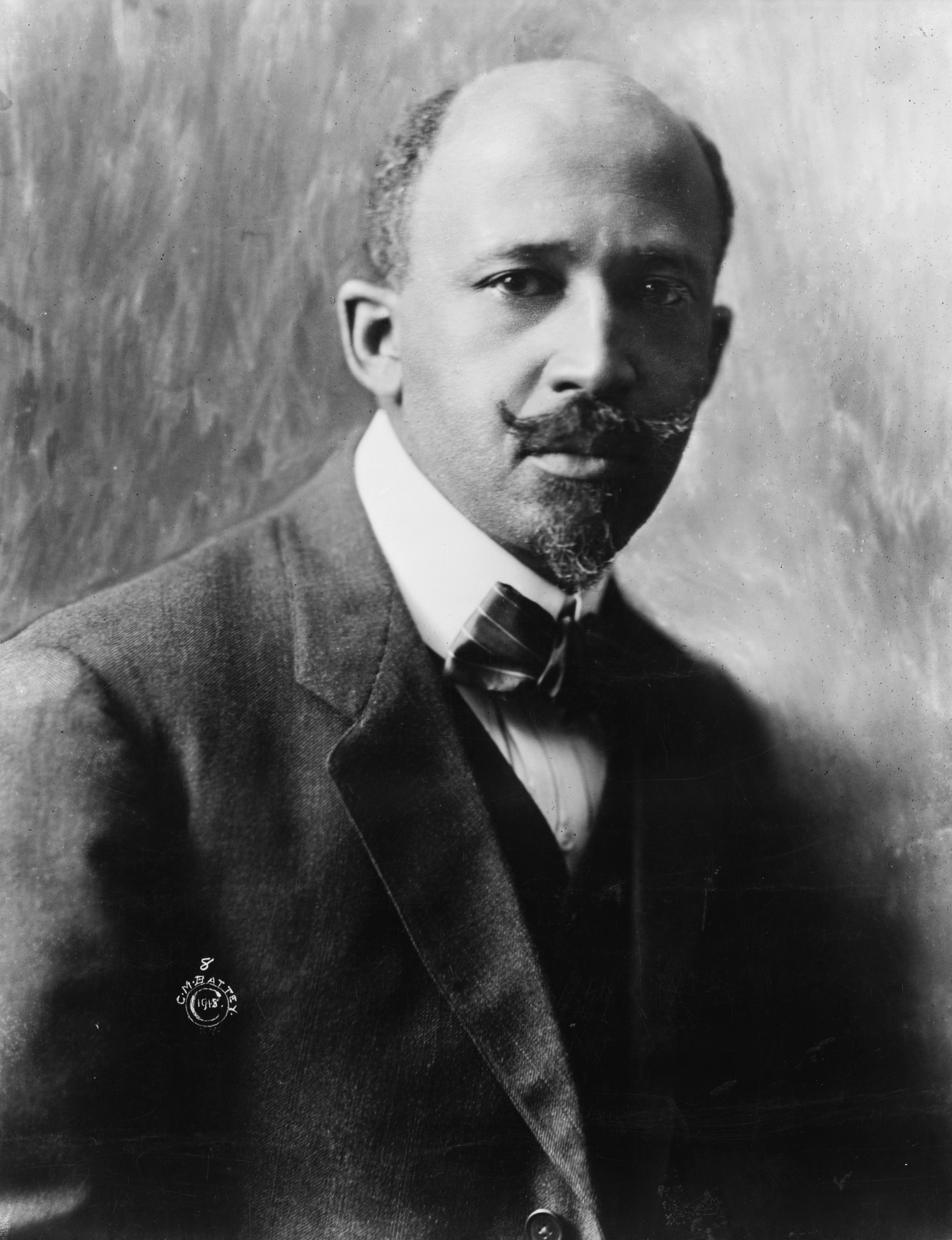
W. E. B. DuBois and Encyclopedia Africana
By Robin Foster


Tribute to W.E.B. Du Bois and his work on the project, "Encyclopedia Africana," in Ghana:

Redeemtours ... W.E.B. Du Bois Center


In 1909, W.E.B. Du Bois conceived of an idea to create an encyclopedia depicting all African people as a way to overcome racism.  He met with strong opposition and betrayal in the United States.  See W.E.B. DuBois and the Making of the Encyclopedia Africana, 1909-1963.

After many years, he was invited to Ghana and was provided with funding for the project in 1961.  He did not live to see his project completed, but he is greatly revered by the people of Ghana. He is buried there and his home was made into a museum.
W.E.B. DuBois Mausoleum. Submitted by Nethanel Nasi.

What difference would there have been in the lives of African Americans had DuBois been able to publish his encyclopedia in America?  How would our relationships with those on the African continent been different today? Are we able today to restore the history that has been lost and strengthen relationships after so long?

You may be surprised to learn as you follow along that the children of the Diaspora have not been forgotten by those on the African continent.

More Resources:

You will discover more about W.E.B. Dubois from the following video. It seems Dr. Henry Louis Gates' had a great uncle who knew him.  I do own Encarta Africana, which Gates discusses.  It is beautifully done. I will share with you, however, the fact their are those who do not believe the encyclopedia is accurate enough.  I cannot provide an opinion on this.


The Encyclopedia Africana
W.E.B. Du Bois had long advocated and pursued an encyclopedia project. In his Autobiography he wrote:

I had planned an "Encyclopedia Africana" in 1909 but my leaving Atlanta for New York postponed this project and the World War prevented its renewal. In 1934 I was chosen to act as editor-in-chief of a new project of the Phelps-Stokes Fund to prepare and publish an Encyclopedia of the Negro. I spent nearly ten years of intermittent effort on this project and secured cooperation from many scholars, white and black, in America, Europe and Africa. But the necessary funds could not be secured. Perhaps again it was too soon to expect large aid for so ambitious a project directed by Negroes and built mainly on Negro scholar­ship. Nevertheless, a preliminary volume sum­marizing this effort was published in 1945. (p.302)
In 1961 Du Bois accepted President Nkrumah's invitation to move to Ghana and work on the Encyclopedia Africana project. The project was underway, but far from being completed by the time of Du Bois's death in 1963. See:  WebDubois.org


Enhanced by Zemanta

Tuesday, June 7, 2011 0 comments


Our History Before Slavery
By Robin Foster

Welcome! I am inviting you on this journey with me to discover who we were before slavery.  I will continue to research the plight of my ancestors during the period of slavery in the America's, however, I know that the best part of who they were existed before they were kidnapped and crossed the Middle Passage.

My focus has been to search out the principles that made them successful so that I can evaluate my own life and provide an example to my posterity.  The African students and friends whom I have known through the years have been good examples to me of hard work, respect, and community.   

I have identified these same qualities in my parents and grandparents and other family members.  Unfortunately, I can only trace my forebears so far at present.  I have found solace in identifying as many as I have been able to document, but I think it is very dangerous to let slavery alienate me from where I came from before slavery.   If I do not overcome the intentions others had to erase who I was, they will be the victors and I will cease to learn more.

I am referring to more than paying someone to examine my DNA and provide a certificate from which tribe I descend. When I look at my round nose, my coarse hair, and the great desire I have to work past the amnesia which erased our sense of who we were and where we came from for myself and my posterity,  my desire is to connect with other African ancestored peoples, share stories and compare notes, then move forward.  

Submitted by Antoinette Harrell.  Trip to Niger.
Thinking I would begin with searching for others who have bridged this gap, I started this site.  Up to this point, it has been my great fortune to collaborate with genealogist, peonage researcher, radio and television Host of Nurturing Our Roots, Antoinette Harrell.  I am fortunate to also be associated with our colleague, Nethanel Nasi.  The sacrifices that they have rendered have paved the way and each of us will be able to add a section to the bridge.  Brother Nasi sacrifices to help the people of Ghana and has recently organized resources and people locally to help people in the Mississippi Delta have the things they need after devasting tornadoes in the region.  I know in my heart that these key individuals would help in this endeavor as well.  I was not prepared, however, to come to the understanding that Brother Nasi as well as Antoinette hold the key to recapturing vital hidden history.  I am happy to be able to share their insights about their experiences on our native land with you.  I also invite others to contribute their stories with us here so that we may all benefit.

Son, Aubrey Younger (Left) (aka) Prince Obiri and Nethanel Nasi  (Right).  
In our second or third conversation, he explained the connection between W. E. B Dubois and Ghana.  There is a museum there, and W. E. B. Dubois is buried there.  I have read and studied the life of  Dubois, but I marvel that so much history is still left for me to discover.  I am also intrigued by the fact that Dubois' personal library was left in Ghana.  

Come back often as we make sacred connections, explore our history before American slavery, and share the stories and experiences of people of African decent from every continent.  


Enhanced by Zemanta

Keep the content flowing!

Welcome!

With the blessings of technology, all African ancestored descendants can develop an online haven where healing can take place. Let's recite and relish in our history. Let's come together to identify the principles that help us to enjoy freedom and happiness. Hopefully, "Over Troubled Water" will be the beginning of that for you. We welcome contributors who will share their history and perspectives that we may all learn and benefit.
Keep the content flowing!

Our Motto:

"I believe that all men, black and brown and white, are brothers, varying in time and opportunity, in form and gift and feature, but differing in no essential particular, and alike in soul and the possibility of infinite development." --W.E.B. Dubois
Creative Commons License
Over Troubled Water by Robin R. Foster is licensed under a Creative Commons Attribution-NoDerivs 3.0 Unported License.
Based on a work at overtroubledwater.blogspot.com.
Permissions beyond the scope of this license may be available at http://overtroubledwater.blogspot.com/.

Disclaimer

The village is coming together! We are from many diverse groups from around the world. We invite you to use Over Trouble Water as an avenue that will spark much needed dialog. This dialog can lead to great enlightenment and healing. Every effort will be made to supplement using historical resources for further study, however, opinions or views expressed in articles reflect the contributor's life experiences and are the responsibility of the respective contributor. Comments should be addressed to the respective contributor.

Follow on Facebook

Bernice Bennett's Show:

Listen to internet radio with BerniceBennett on Blog Talk Radio

All My Social Sites

Like Us on Facebook

Over Troubled Water Daily

Followers